Minimally invasive, camera-guided diagnosis and repair of joint injuries — smaller incisions, less trauma to surrounding tissue, and a faster path back to activity.
Arthroscopy uses a small camera inserted through a tiny incision to examine and treat the inside of a joint — most commonly the knee and shoulder — without opening it up fully.
Because the approach is minimally invasive, it typically means less post-operative pain, a shorter hospital stay and quicker return to movement compared to open surgery. It's used both to diagnose unclear joint pain and to repair torn ligaments, cartilage and tendons from sports and everyday injuries.
High-definition camera visualization with minimal tissue damage.
Reduced surgical trauma means a quicker return to sports & daily mobility.
Precision treatment for ACL, meniscus, rotator cuff, and cartilage tears.
Common reasons patients are referred for an arthroscopic evaluation.
Knee or shoulder pain that started after a fall, twist, or impact during play.
A joint that feels swollen, catches, or locks up during movement.
The joint feels like it might "give way" under weight or during activity.
Symptoms that haven't settled with rest, ice, and initial physiotherapy.
Clinical Note: An MRI or clinical exam usually confirms whether an injury needs arthroscopic repair or can be managed conservatively.
A staged plan built for athletes and active patients alike.
Clinical exam combined with imaging to pinpoint the exact structure involved — ligament, cartilage or tendon.
Camera-guided repair — such as meniscus repair, ligament reconstruction, or rotator cuff work — through tiny incisions.
A staged physiotherapy programme that rebuilds strength before clearing you for full activity.
Arthroscopy is done through a few small incisions using a camera and thin instruments, instead of one large opening — this generally means less tissue disruption and a faster recovery.
Timelines vary by injury and procedure, but many patients return to light activity within weeks and full sport within a few months, guided by a structured rehab plan.
Torn meniscus, ACL and other ligament injuries, rotator cuff tears, and cartilage damage in the knee or shoulder are among the most common.
No — it's equally used for joint injuries from daily activity, falls, or age-related wear, not just sports injuries.
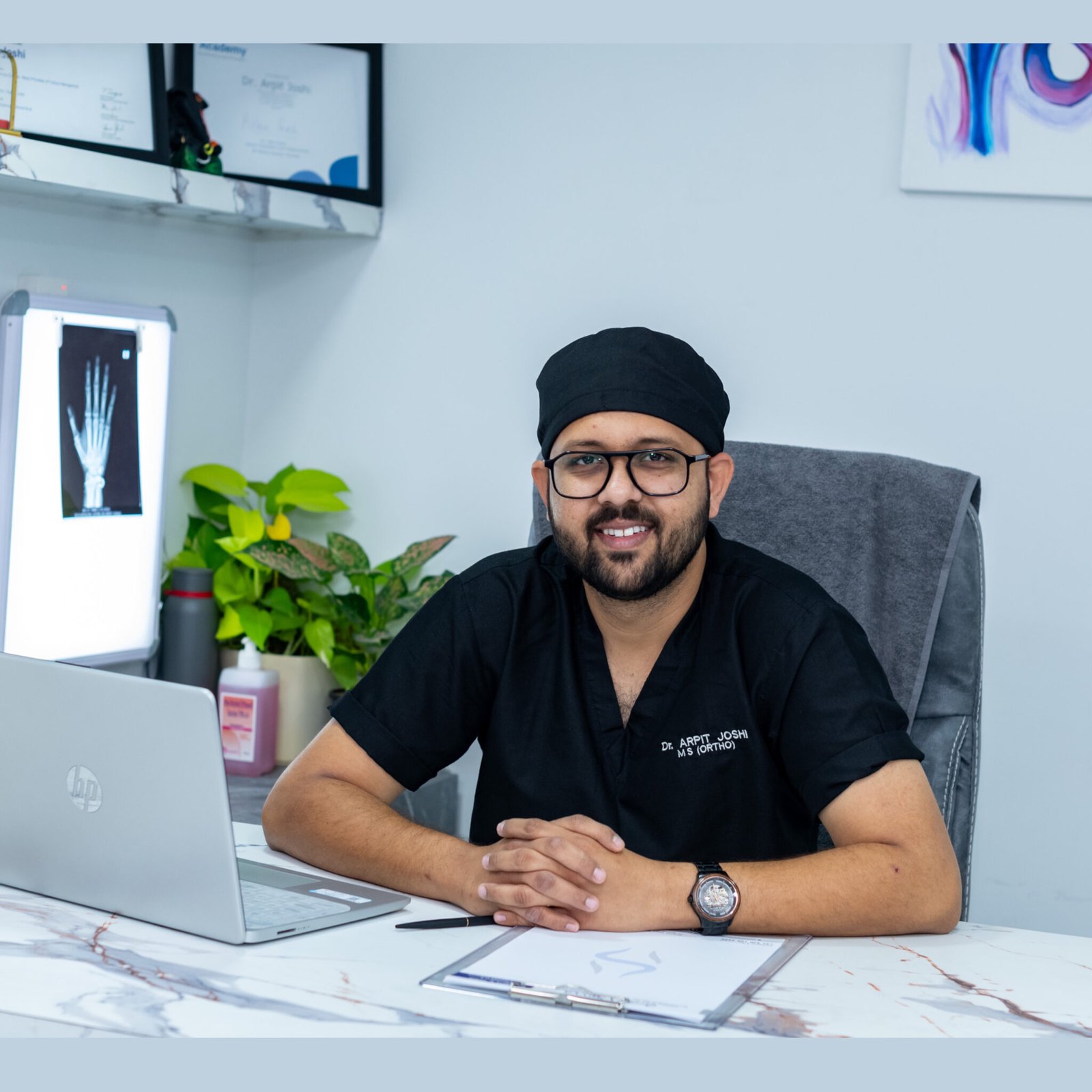
Cutting-Edge Care for Exceptional Outcomes
As a leading orthopaedic specialist in Ahmedabad, Dr. Arpit Joshi delivers evidence-based, transparent care for complex fractures, sports injuries, and debilitating joint pain. Merging advanced surgical precision with a strictly ethical, patient-first philosophy, he focuses on restoring true mobility and enduring bone strength without unnecessary procedures.
Have a question about a sports injury or want to schedule a visit? Send us a message and our team will get back to you.