Managing excess protein loss in a child's urine that causes swelling and low blood protein — with precise diagnosis, evidence-based treatment, and close follow-up to protect long-term kidney health.
Nephrotic syndrome is a kidney disorder in which the tiny filters in the kidney (glomeruli) become leaky, allowing large amounts of protein — mainly albumin — to spill into the urine. This protein loss leads to low blood protein levels and causes fluid to accumulate in body tissues, most visibly as puffiness around the eyes and swelling in the legs, ankles and abdomen.
The most common type in children (minimal change disease) responds well to steroids, and many children achieve complete remission. Some children experience relapses — repeated episodes of protein leakage — that require ongoing management. A small number have steroid-resistant disease that requires further investigation and alternative medications. The goal of treatment is to achieve and maintain remission, prevent complications and support the child's normal growth and development.
Puffiness around a child's eyes on waking — especially if it comes and goes — is a classic early presentation of nephrotic syndrome that should prompt urine testing.
Children in relapse are more susceptible to bacterial infections — particularly peritonitis. Any fever in a child with nephrotic syndrome should be evaluated promptly.
Parents are taught to check their child's urine daily with a dipstick test at home — early detection of protein allows relapse to be caught and treated quickly.
These features suggest nephrotic syndrome or a relapse — early assessment and urine testing confirms the diagnosis quickly.
Note: A simple urine dipstick test showing 3+ or 4+ protein, alongside the clinical features below, is usually enough to make the diagnosis and begin treatment.
Periorbital puffiness on waking that improves through the day is often the first sign parents notice — it tends to appear suddenly and may be dismissed as tiredness initially.
As protein levels fall further, fluid collects in the legs, feet and belly — the child may appear unusually bloated or have difficulty fitting into shoes.
Excess protein in the urine can make it appear frothy — a useful observation that should prompt testing with a urine dipstick.
As fluid shifts out of the bloodstream into tissues, the kidneys may produce less urine — a sign that the condition needs active management.
A structured, family-centred plan designed to achieve remission quickly and reduce the frequency and impact of relapses.
Urine protein testing, blood albumin and cholesterol levels, and blood pressure — confirming nephrotic syndrome and establishing a baseline before treatment begins.
Standard steroid protocol tailored to the child's weight and response — with clear milestones for remission and a planned taper once protein clears from the urine.
Parent education on home urine monitoring, an action plan for early relapse treatment, and steroid-sparing agents where frequent relapses require a longer-term strategy.
Mild first presentations can often be managed with outpatient steroid treatment and close follow-up. Hospital admission is needed when swelling is severe, there are signs of infection, or the child is very unwell. Relapses caught early through home monitoring are usually managed without admission.
Many children with minimal change nephrotic syndrome — the most common type — do outgrow the tendency to relapse by late adolescence or early adulthood. Some have only one or two episodes. Others have a more relapsing course that is managed with careful treatment over several years.
Repeated or prolonged steroid courses can cause side effects including weight gain, growth impact and bone health concerns. Where a child is relapsing frequently, steroid-sparing medications are introduced to reduce overall steroid exposure — protecting long-term health while keeping the condition under control.
Yes — during remission, most children can attend school and participate in normal activities. During a relapse with significant swelling, rest and reduced activity may be advised temporarily. The school will need to be aware of the condition so that any signs of infection are acted on quickly.
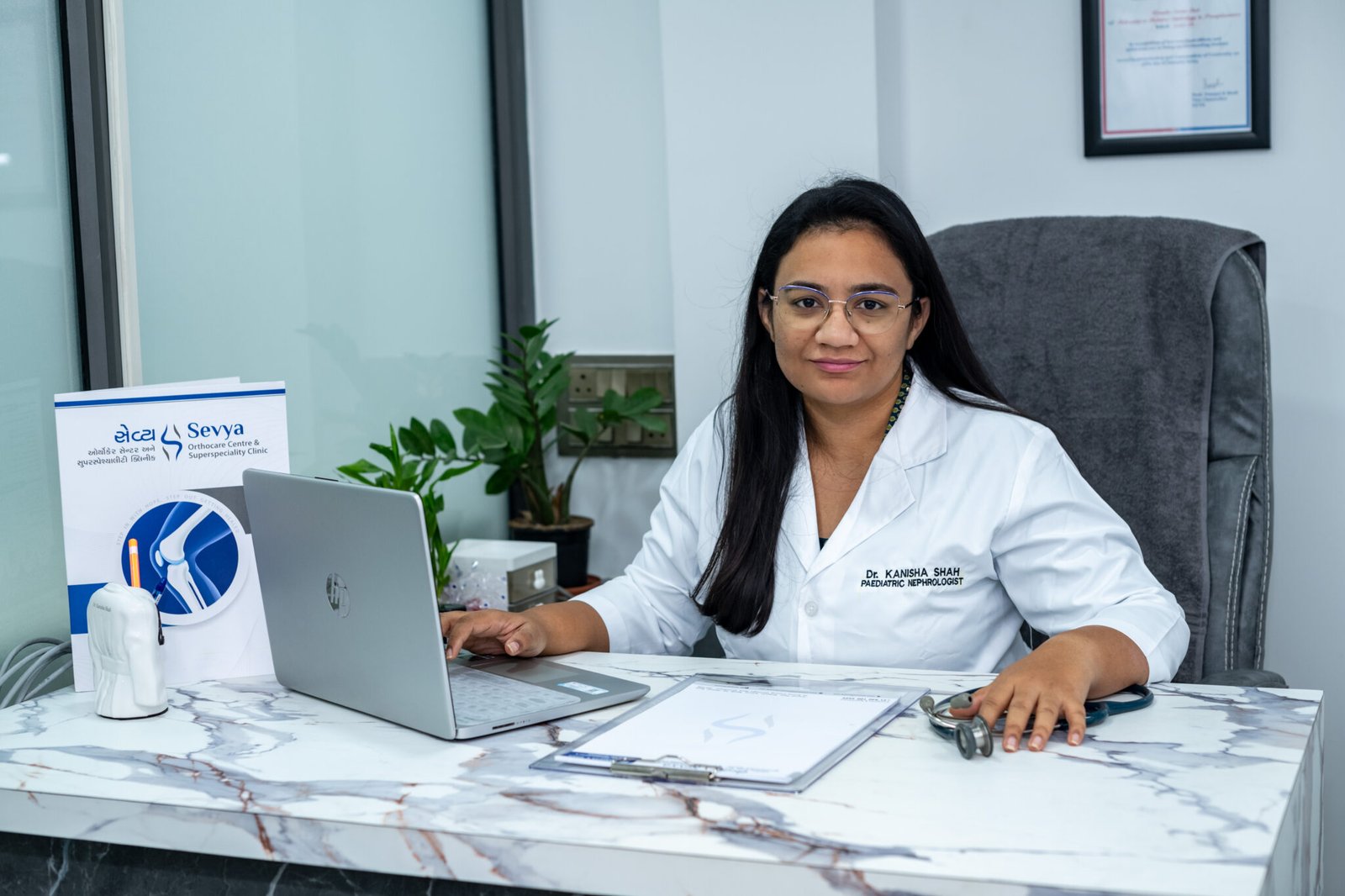
Nurturing Young Kidneys for a Lifetime
When it comes to your child's kidney health, finding the right specialist makes all the difference. As the only dedicated child kidney doctor in East Ahmedabad and one of the select few across Gujarat, Dr. Kanisha Shah brings rare, highly specialized expertise directly to your community. She provides precise, deeply reassuring care for complex conditions—from persistent bed-wetting and recurrent UTIs to nephrotic syndrome. Dr. Shah partners closely with parents, delivering honest, evidence-based treatments designed to protect, heal, and nurture developing kidneys for a lifetime.
Have a question about your child's condition, or want to schedule a visit?