
Diagnosing and treating kidney and urinary stones in children — identifying the underlying metabolic or dietary cause to relieve pain, clear the stone, and prevent recurrence.
Kidney stones — solid deposits of mineral or salt that form inside the kidneys — are not just an adult problem. Their prevalence in children has increased significantly over the past two decades, partly driven by changes in diet, hydration habits, and rising rates of obesity and metabolic conditions.
In children, a metabolic underlying cause is found far more often than in adults — conditions like hypercalciuria (excess calcium in urine), hyperoxaluria, hypocitraturia, cystinuria, or a structural urinary tract abnormality are identified in the majority of paediatric stone formers. This makes paediatric stone disease a nephrology matter as much as a surgical one: finding and treating the cause prevents recurrence far more effectively than treating stones alone. Management combines pain relief, hydration support, dietary adjustment, medications where needed, and urological referral if the stone needs removal.
Increasing daily fluid intake to keep the urine dilute and pale is the single most effective measure for reducing stone risk in children with any stone type.
Counterintuitively, restricting dietary calcium increases oxalate absorption and raises stone risk. Normal, age-appropriate calcium intake should be maintained.
If a stone is passed or retrieved, analysis of its composition is essential — different stone types have different metabolic causes and require targeted dietary and medical prevention.
Symptoms in children can differ from the classic adult presentation — some children present with vague abdominal pain or recurrent UTIs rather than the typical loin-to-groin pain.
Note: Blood in the urine — visible or on a dipstick — combined with abdominal or flank pain in a child should prompt imaging to look for a stone.
Colicky pain — coming in waves — in the flank, abdomen or groin is the hallmark of a stone moving down the ureter. In younger children, it may be reported as belly pain without a clear location.
Haematuria (visible or microscopic blood) is found in up to 90% of children with kidney stones and is often the first investigation finding that points toward a stone.
Struvite (infection) stones form in the presence of certain bacteria. Recurrent UTIs — particularly with the same organism — should prompt imaging of the kidneys and urinary tract.
A stone causing obstruction can produce nausea, vomiting, and inability to pass urine — symptoms that require urgent evaluation to assess kidney function and drainage.
Treating the stone is the first step — finding and managing the underlying cause is the priority for preventing recurrence.
Ultrasound (first choice in children, avoids radiation) to localise the stone, assess kidney drainage, and guide urgent management — including pain relief and hydration.
24-hour urine collection, blood tests and, where possible, stone analysis to identify the underlying cause — hypercalciuria, hyperoxaluria, cystinuria, or a structural abnormality.
Personalised hydration targets, dietary adjustments, and medications (e.g., potassium citrate, thiazide diuretics) tailored to the stone type and metabolic abnormality found.
Small stones (under 5mm) often pass spontaneously with adequate hydration and pain management. Larger stones, stones causing obstruction, infection or kidney function impairment, or those that do not pass within a reasonable period may require minimally invasive procedures (ureteroscopy or ESWL) — performed by a paediatric urologist.
The target is to keep the urine pale and dilute — typically requiring 1.5–2 litres per day for school-age children, more in hot weather or after exercise. Lemon juice in water is beneficial for most stone types because it increases urinary citrate, which inhibits stone formation.
Dietary advice is guided by the stone type and metabolic findings. For calcium oxalate stones, reducing sodium and animal protein is more important than reducing calcium. Dietary restrictions should be discussed with the nephrologist to avoid nutritional deficiencies in a growing child.
Recurrence risk depends on the underlying cause. Without metabolic evaluation and treatment, recurrence rates are high. With an identified cause and appropriate treatment — whether dietary changes, medications, or both — recurrence can be substantially reduced. Regular follow-up with kidney imaging and urine monitoring is important.
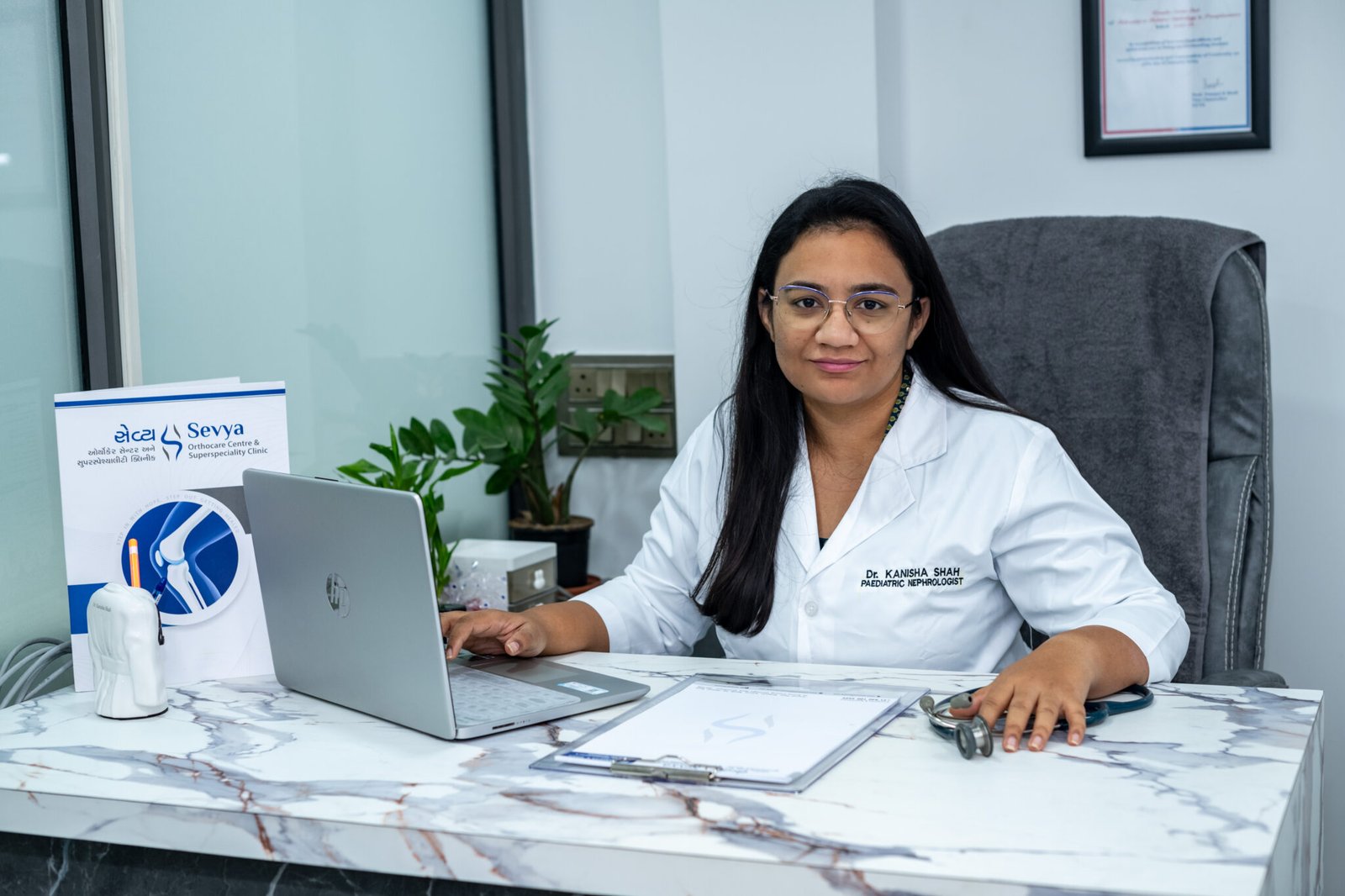
Nurturing Young Kidneys for a Lifetime
When it comes to your child's kidney health, finding the right specialist makes all the difference. As the only dedicated child kidney doctor in East Ahmedabad and one of the select few across Gujarat, Dr. Kanisha Shah brings rare, highly specialized expertise directly to your community. She provides precise, deeply reassuring care for complex conditions—from persistent bed-wetting and recurrent UTIs to nephrotic syndrome. Dr. Shah partners closely with parents, delivering honest, evidence-based treatments designed to protect, heal, and nurture developing kidneys for a lifetime.
Have a question about your child's condition, or want to schedule a visit?