
Prompt diagnosis and treatment of UTIs in children — with appropriate investigation after a first confirmed infection to identify any structural abnormality that increases recurrence risk and protects long-term kidney health.
A urinary tract infection (UTI) occurs when bacteria — most commonly E. coli — colonise the bladder (cystitis) or spread to the kidney (pyelonephritis). While a simple bladder infection is uncomfortable but rarely dangerous, an upper tract infection that reaches the kidney can cause inflammation (pyelonephritis) and — if not treated promptly — permanent renal scarring.
In infants and young children, the symptoms of a UTI can be frustratingly non-specific: unexplained fever, poor feeding, irritability, vomiting — without the burning, urgency, or frequency that older children and adults describe. This makes prompt, accurate diagnosis critical. After a confirmed UTI — especially in a child under 2 years, or any child with fever — appropriate imaging to detect vesicoureteral reflux (VUR) or structural abnormalities is essential. Without this step, the underlying reason for the infection can be missed, leading to repeated infections and avoidable kidney damage.
A contaminated urine sample leads to a false-positive result and unnecessary treatment. In infants who are not toilet-trained, suprapubic aspiration or catheter sampling gives a reliable result.
Any infant under 3 months with fever, and any child under 2 with unexplained fever that doesn't resolve within 48 hours, should have a urine sample tested as part of the fever work-up.
Vesicoureteral reflux — urine flowing backwards from bladder to kidney — is found in up to 30% of children after a first UTI and is a significant risk factor for renal scarring with repeated infections.
Symptoms vary significantly with age — young infants may show no urinary symptoms at all.
Note: In any child with fever and no obvious source, urine should be tested — a UTI is often found and treated once properly investigated.
Fever (often the only sign), poor feeding, vomiting, irritability, jaundice in newborns, or an offensive smell to the nappy. Urinary symptoms are usually absent at this age.
Abdominal pain, unexplained fever, bed-wetting after a dry period, crying during urination, or changes in urine colour or smell.
Burning or pain on urination, frequent trips to the toilet (urgency), cloudy or foul-smelling urine, lower abdominal pain, and — with an upper tract infection — loin pain, fever, vomiting and feeling very unwell.
Two or more UTIs in girls, one febrile UTI in boys, or any UTI with an unusual organism should prompt investigation for a structural urinary tract abnormality.
A structured approach that goes beyond treating the acute episode to identify and manage any underlying risk factor.
Proper urine collection and culture to confirm the diagnosis and identify the causative organism — avoiding antibiotic use based on unreliable specimens.
Antibiotic choice guided by the culture result and local sensitivities — with oral antibiotics used wherever possible and IV treatment reserved for infants or very unwell children.
Renal ultrasound after a first febrile UTI; MCUG to detect VUR in appropriate cases; DMSA scan to assess for renal scarring — with prophylactic antibiotics and monitoring for children with VUR.
Recurrent UTIs in children are often associated with vesicoureteral reflux (VUR), incomplete bladder emptying, constipation, or structural urinary tract abnormalities. A thorough investigation after the second UTI — or the first febrile UTI — helps identify the underlying cause and guide prevention.
A single, promptly treated UTI rarely causes lasting kidney damage. It is repeated, undertreated, or late-treated upper tract infections — particularly in children with VUR — that carry a risk of renal scarring. This is why post-UTI investigation and proper follow-up are so important.
Low-dose prophylactic antibiotics are recommended for children with VUR (particularly higher grades), recurrent UTIs, or a history of renal scarring. The decision is individualised — antibiotic prophylaxis reduces infection risk while the underlying condition resolves or is definitively treated.
Good fluid intake throughout the day, regular and complete bladder emptying (avoid holding), proper wiping technique in girls (front to back), treating constipation promptly, and avoiding bubble baths or tight synthetic clothing all help reduce recurrence risk in children without a structural abnormality.
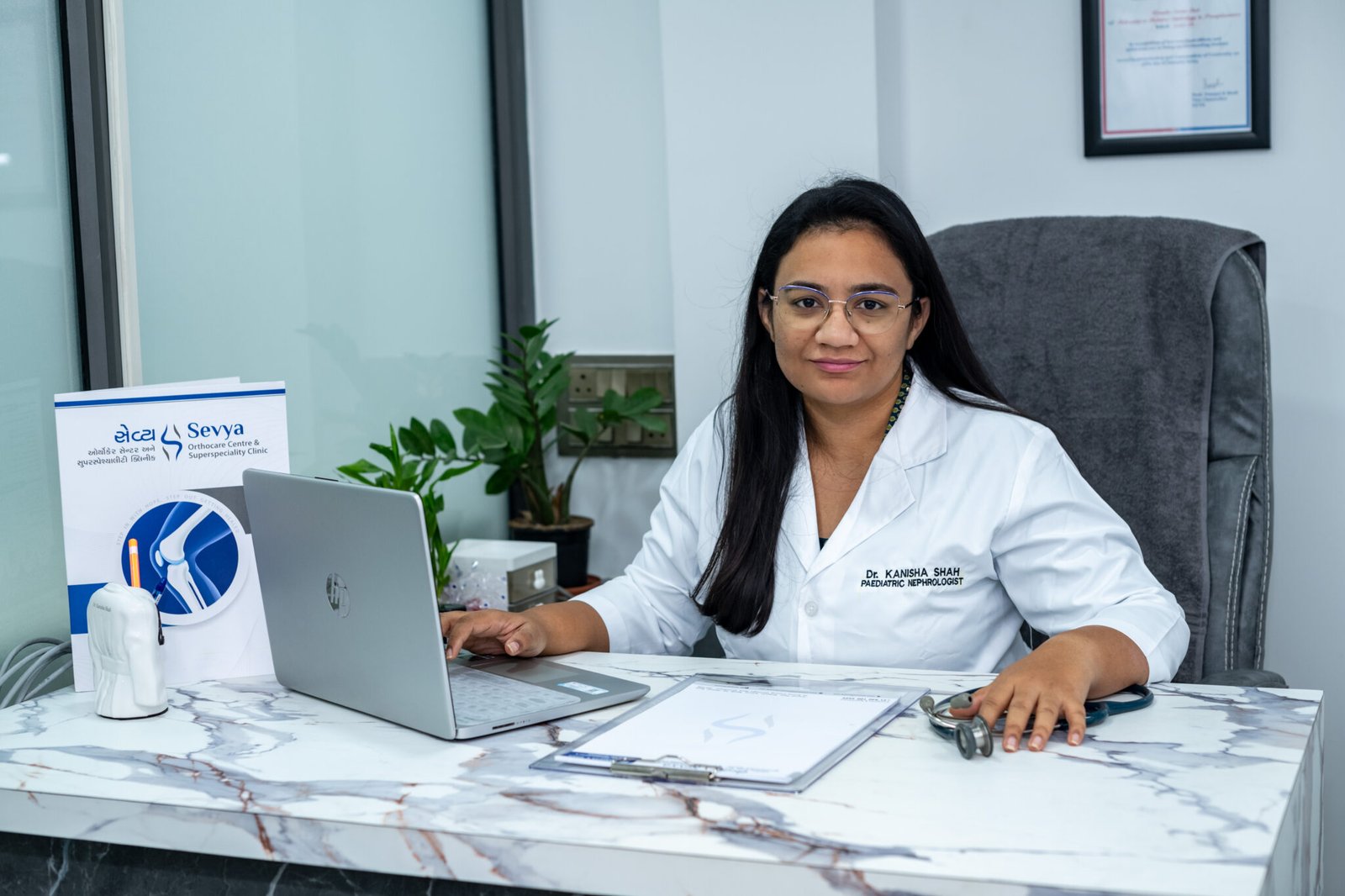
Nurturing Young Kidneys for a Lifetime
When it comes to your child's kidney health, finding the right specialist makes all the difference. As the only dedicated child kidney doctor in East Ahmedabad and one of the select few across Gujarat, Dr. Kanisha Shah brings rare, highly specialized expertise directly to your community. She provides precise, deeply reassuring care for complex conditions—from persistent bed-wetting and recurrent UTIs to nephrotic syndrome. Dr. Shah partners closely with parents, delivering honest, evidence-based treatments designed to protect, heal, and nurture developing kidneys for a lifetime.
Have a question about your child's condition, or want to schedule a visit?